
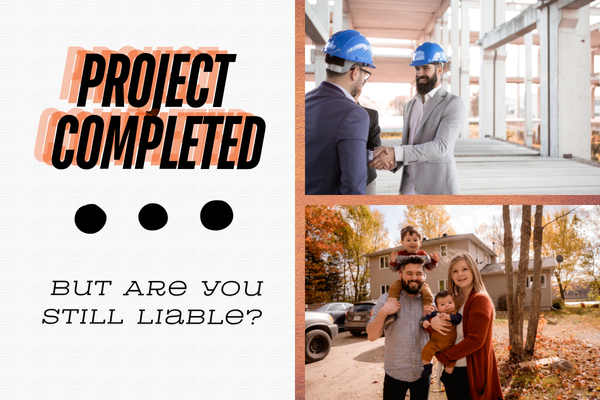
Products-completed operations insurance protection is built into General Liability (CGL) or BOP policies. The Product Liability covers injury or property damage caused by physical products you manufacture, install, or sell—even after they leave your care. The Completed Operations protects you if your work (e.g., installed roof, plumbing, HVAC) results in damage or injury after the job is done and you’re off-site.
Crucially, both coverages apply only if the injury or damage occurs after completion and away from your premises.
Why Every Contractor Needs This Protection
- Post-completion defects happen: Think a leaky roof, a collapsing railing, or faulty wiring—it could be weeks or even months after project handoff. A collapsed railing six months later? That’s what “completed operations” coverage is for.
- Product failures pose serious liability: Even a small hardware defect can cause fire or injury liability—product coverage steps in there.
- Long-tail risks: Statutes of repose can extend your liability years post-completion—some up to 10–15 years.
- Contractual demands: Many contracts require proof of extended products-completed operations coverage.
It does cover:
- Third-party bodily injury or property damage caused by your product or completed work, including legal defense, settlements, and judgments.
It doesn’t cover:
- Damage to your own product or work—e.g., your own roof doesn’t qualify.
- Impaired property—like a cracked foundation that ruins a building even if no third-party harm occurred.
- Defective products recall costs—needs separate recall coverage.
Real life examples
A homeowner’s newly installed deck collapses six months later, injuring someone—completed operations applies.
A railing gives way, causing bodily harm after the crew left—again, covered.
A faulty appliance sold to a client overheats and damages property—product liability steps in.
How to Ensure You’re Properly Protected
- Verify coverage is included: Make sure your CGL or BOP explicitly has “products-completed operations” without unwanted exclusions.
- Check per-occurrence & aggregate limits: Ensure limits are enough to cover major claims or multiple incidents in a policy term.
- Understand the policy trigger: Coverage only activates if the injury/damage occurs while the policy is active. If it happens after the policy expires, you’re not covered.
- Watch for exclusions: Your policy might exclude certain types of finished work—inspect your “your work” exclusions closely.
- Buy tails if needed: If switching brokers or retiring, consider adding an extended reporting period to maintain defense coverage for future claims.
- Meet contractual obligations: Review contracts to see if clients require completed operations coverage years past project completion.
Product liability and completed operations coverage are essential for any contractor or business working with products or installed systems. Without it, you’re vulnerable to post-job defects, injuries, or system failures—sometimes years after you’ve finished.
Want a policy review, contract insurance evaluation, or tail quote? Contractors Insurance Agency is here for you.